Extensive Stakeholder Consultations Enrich UN’s Development Landscape Assessment

𝐓𝐰𝐞𝐥𝐯𝐞 𝐬𝐭𝐚𝐤𝐞𝐡𝐨𝐥𝐝𝐞𝐫 𝐜𝐨𝐧𝐬𝐮𝐥𝐭𝐚𝐭𝐢𝐨𝐧𝐬 𝐰𝐢𝐥𝐥 𝐬𝐡𝐚𝐩𝐞 𝐚 𝐧𝐞𝐰 𝐝𝐞𝐯𝐞𝐥𝐨𝐩𝐦𝐞𝐧𝐭 𝐥𝐚𝐧𝐝𝐬𝐜𝐚𝐩𝐞 𝐚𝐬𝐬𝐞𝐬𝐬𝐦𝐞𝐧𝐭
Grassroots insights and comprehensive feedback from a wide range of stakeholder groups will anchor a new UN assessment of Trinidad and Tobago’s development landscape, as part of the UN’s commitment to creating a people-centred evidence base to drive sustainable development progress.
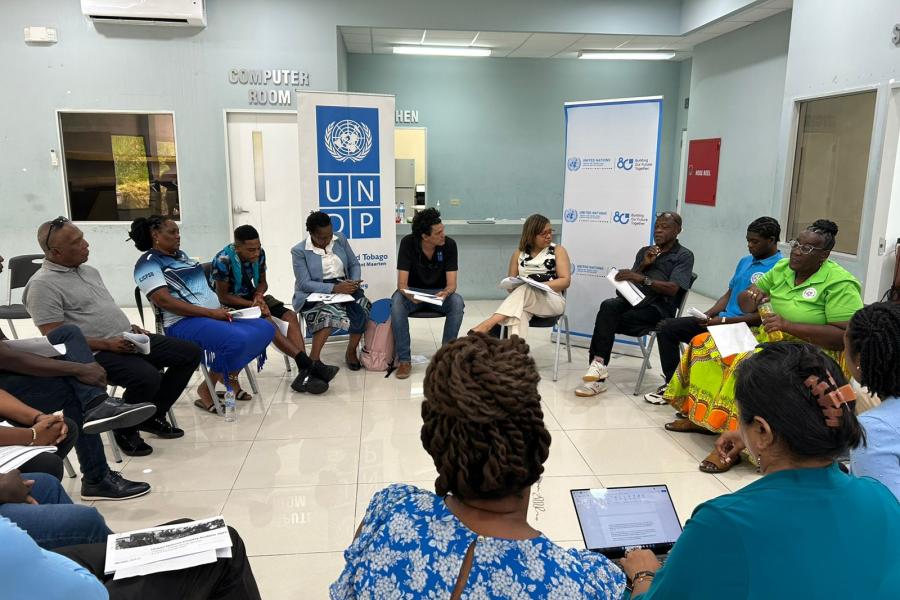
Twelve diverse focus group consultations held across both Trinidad and Tobago demonstrate the UN’s deep commitment to Leave No One Behind (LNOB) by elevating the voices of groups whose experiences are often underrepresented in official data or national dialogue.
This rich range of Trinbagonian perspectives will shape the UN’s 2025 Common Country Analysis, an independent, evidence-based assessment of Trinidad and Tobago’s development challenges and opportunities. The CCA is a fundamental building block for drafting the upcoming UN Multi-Country Sustainable Development Cooperation Framework (UNMSDCF) 2026–2031, a blueprint for the UN’s work with countries to accelerate their achievement of the Sustainable Development Goals.

Hosted between September and October 2025, the United Nations Country Team (UNCT), with coordination support from the UN Resident Coordinator’s Office (RCO), convened focus group discussions with:
- Tobago residents (one consultation in Belle Garden and the other in Canaan)
- Refugees and migrants
- Girls
- Boys and young men
- Disaster risk resilience experts
- Climate and environment practitioners
- Prevention of violence and social cohesion practitioners
- Gender equality and women’s empowerment groups
- Older persons
- Organisations of Persons With Disabilities
- Faith-based organisations, and
- Youth
Why focus groups matter for the CCA
While national statistics and policy reviews remain essential, focus group consultations provide something no dataset can fully capture: the lived experiences, perceptions, and day-to-day realities that reveal how development challenges and opportunities truly play out in people’s lives.
These qualitative insights strengthen the CCA by:
- Surfacing underreported or invisible issues affecting marginalized communities
- Explaining the “why” behind quantitative data trends
- Highlighting rights-based and gendered dimensions of exclusion
- Illuminating geographic disparities, especially between Trinidad and Tobago
- Validating or challenging assumptions found in policy documents
- Revealing unintended consequences of programmes or systems
- Identifying proven entry points and solutions to development challenges
By capturing these nuances, the forthcoming CCA will provide a sharper, more inclusive foundation for UN programming and investment.

A companion knowledge product for the development community
In addition to integrating the insights directly into the CCA, the Office of the Resident Coordinator is developing a companion knowledge product that brings together the extensive qualitative feedback gathered from all 12 consultations. This resource will be publicly accessible and can be used by civil society organisations, Government ministries and agencies, UN entities, academia, private-sector partners, and development stakeholders.
It will serve as a practical reference tool for designing programmes, policies, and services that respond directly to the needs, priorities, and experiences of groups most at risk of being left behind.
Building on these consultations, the UN Country Team will continue engaging stakeholders to ensure there is continuous dialogue to shape the UN's programming.


Written by

Faine Richards
UN entities involved in this initiative
Goals we are supporting through this initiative