Story
15 December 2025
2025 ACM: Shifting Gears from Vulnerability to Resilience
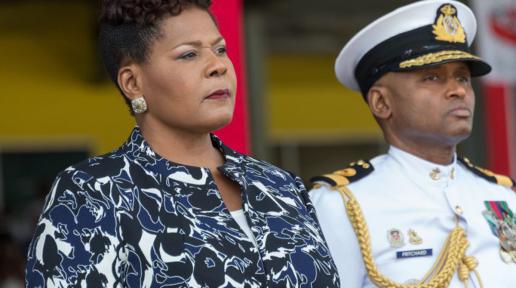
Port of Spain, Trinidad and Tobago — Caribbean governments gathered for the 2025 Annual Coordination Meeting (ACM) to discuss progress in implementation of the UN Multi-country Sustainable Development Cooperation Framework for the Caribbean (UNMSDCF) and set clear long-term priorities for the future partnership. They delivered a clear mandate to the United Nations to strengthen multilateralism and work on sustainable development, calling for continued UN support on climate resilience and disaster risk management, economic diversification, human capital development, digital transformation and citizen security. The meeting marked a milestone in the collective Caribbean effort to accelerate development before the 2030 deadline for achieving the Sustainable Development Goals (SDGs).Held in Port of Spain on December 10, the ACM brought together representatives from 16 signatory countries and CARICOM to shape the direction of the next UNMSDCF for 2027–2031—the UN’s strategic focus for development support across the English- and Dutch-speaking Caribbean. The priorities articulated during the 2025 ACM closely link UN system support with the ambitions of the Antigua and Barbuda Agenda for SIDS (ABAS), adopted in 2024. From climate-resilient infrastructure to blue and green economies, digital public services and shock-responsive social protection, governments used the 2025 ACM to underscore that ABAS is now shaping national and regional expectations for UN cooperation. The ACM translated these global SIDS commitments into concrete, region-specific priorities—reinforcing ABAS as a practical agenda for delivery.In 2024, the combined investment of the UN development system in the Caribbean under the current UNMSDCF for 2022-2026 was approximately US $200 million, representing a continued upward trend in funding mobilization. Details on the UN’s regional delivery were captured in a newly-released Regional Results Report, an unprecedented Caribbean-wide snapshot that outlines the UN’s work across six United Nations Country Teams (UNCTs): Belize; Guyana; Jamaica (covering five Member states); Suriname; Trinidad and Tobago and the Dutch Islands; and the Eastern Caribbean (based in Barbados, covering ten Member States and overseas territories).Speaking during the ACM opening ceremony, Trinidad and Tobago’s Minister of Planning, Economic Affairs and Development, Senator Dr. the Honourable Kennedy Swaratsingh, reflected on progress under the current UNMSDCF while underscoring the region’s ambition for the next phase of cooperation.“As we reflect on what has been achieved under the current MSDCF, we acknowledge meaningful progress across the region. These achievements reflect the value of what we can achieve when global expertise and national priorities are aligned,” Minister Swaratsingh said. “The next Cooperation Framework will mark the shift from vulnerability to resilience. This is where the Caribbean’s strength is rooted—in innovation, in the ability to adapt and support one another. While the challenges ahead are real, so is our collective capacity to overcome them.” United Nations Resident Coordinator for Trinidad and Tobago, Suriname, Aruba, Curaçao and Sint Maarten, Joanna Kazana, emphasised that the next framework must be firmly shaped by government leadership and strategic clarity.“The UN is using forecasting and foresight to understand where the changing global context may take us,” Ms. Kazana said. “Tell us what you want the UN system to prioritise in this partnerships so the region can accelerate progress on the 2030 Agenda and deliver equitable, inclusive and resilient development for every Caribbean citizen.” The feedback from governments comes at a decisive moment, since the 2027–2031 UNMSDCF will be the final framework before the deadline for the 2030 Agenda—leaving little room for fragmented or incremental action.The priorities articulated at the 2025 ACM will now inform joint planning to design the 2027–2031 UNMSDCF. As governments and the UN move into this phase, the emphasis will be on sharpening focus, mobilising partnerships and ensuring the framework is positioned to deliver measurable impact in the Caribbean’s critical final push toward the SDGs.